Showing posts with label film. Show all posts

Saturday, May 22, 2021

Criticism Concepts Part 5: Actors and the Stage of Humanity


[Part 3 of my Screened Narrative series.  For parts 1 and 2 dealing with the screenplay and director, respectively, click here and here]


Previously, we looked at the pivotal role played by the director in creating a movie or television series. As maestro of the production set, directors weave their clamorous charges through peaks and valleys to lift the still images and stock archetypes of the screenplay into the dynamic, organic flow of narrative time which defines both the silver and small screens. But every choir contains its star soloist, and while directors hold the ultimate reins no matter who else joins them, the only other set piece in the grand film chessboard to match or surpass them in audience recognition is the acting crew. Moviegoers are enamored with “stars,” those lucky few whose performances on screen elevates them to a form of immortality envied by even the great Taoist sages.


But what makes a good actor or actress? Or, more specifically, what qualities should actors possess to best bring the characters of the screenplay and in the director’s vision to life? Acting is the most mercurial and elusive element of the film team, and so cannot be spied through a single one-size-fits-all filter. Only when we step back and see the full panoramic spectrum of the craft can we truly appreciate those who stand on the other side of the curtain rise.


Contributor 3: The Actors

Many are under the misconception that because they have seen so many movies they understand acting. Developing an eye for performance is difficult and requires hard work, diligent study, and possibly acting classes, and even some acting to fully understand the craft. - Jeremiah Comey


The quote above highlights the inherent difficulty of pegging down the meat and potatoes of this most slippery of performance crafts. As the most visible element of the cinema creation process, actors draw our eye and move the narrative along. Characters are the vehicles within a story; whether as avatars, inserts, or objects of voyeuristic glee, few stories stand in the absence of characters. Naturally, you’d expect this to place actors at the very nexus of on-set importance, right? 


 Well, yes and no.


A lot depends on what approach you take on the matter. Actors, especially strong leads, evoke intensely personal and psychological responses from an audience that even the most artistically manipulative directors and cinematographers can barely elicit. This means that opinions on acting vary based on audience connection, star charisma, and the various methods and schools which buttress the profession. Due to this inherent complexity, the usual straightforward and linear-logical approach I tend to take with this series will fall short. 


Instead, I’ll take a look at the ways through which both the audience and filmmakers view acting and connect to actors based on the role and expectations placed on them. To form a complete picture of what acting means to the business of screened entertainment, I’ve split its function in the production into three parts, each corresponding to a different aspect of acting's je ne sais quoi: the actor as extension of the director’s will, represented by the film or television extra; the actor as character conjurer, best typified by the professional thespian; and lastly, the actor as mirror of the audience’s social and psychological expectations, reflected in the charisma and persona of the movie star. 


Living Props


What can be said about extras and amateur non-professionals in a production? They seem inconsequential, usually have little to no speaking roles, and are as nameless and forgettable as a stone in an English poppy field. They’re hardly what comes to mind when you think “actor,” and yet no film or tv studio set would be complete without them. Extras, in fact, form the foundation stone of the acting pyramid through one simple fact: they remind us that actors persist at the behest of the director.


Recall that while directors and screenwriters share a shaky equality in the production process, everyone else on the set dances to the tune of the one literally calling the shots. To embrace acting at its bare bones means to look at what the director demands from it. For one, actors create a sense of place; they are, in this strictly utilitarian sense, extensions of the director’s command of location and space. As a corollary, these additional faces in the crowd also add a sense realism to a scene. These are two vital pieces of the creative process that rarely get mentioned in a script beyond a minor footnote, and yet can change the tone and color of a film sequence. A restaurant with only two people at any time but the witching hour looks and feels unnatural, and unless that’s what the filmmaker’s going for, the audience will tell that something’s “off,” even if they can’t put it into words. As extras, as actors, these anonymous groups add a much needed depth and volume.  


Besides film extras and their underappreciated value, the non-professional performer exists as another category of the “actor-as-director’s-prop” enterprise. They differ from extras in their ability to command the camera’s attention for a while, or even have speaking lines. They add another value to the screen: authenticity. Authenticity is no mere synonym for realism; there’s a subtle difference, particularly when an audience’s reaction enters the equation. Authenticity speaks of what appears to be genuine, based on expectation or experience, while realism handles the brunt facts of a scene (or the world at large).  


Take After Life, a 1998 Japanese film by Hirokazu Kore-eda. As a humanistic supernatural drama whose central theme involves how the memories we make in this life affect what we experience in the hereafter, Kore-eda peppers his film with live interviews of people’s fondest memories. Are the testimonies from these performers “realistic” in the way discussed above? Who can say how realistic a past-life review is “supposed” to be. The key thing is that these interviews lend an authentic feel to the subject matter; the amateur performers move, laugh, break down, and emote in ways which ring true to the audience. Put another way, the difference between realism and authenticity can be chalked up to our level of scrutiny. We take reality for granted, and only notice it when something tilts our view sideways like watching actors stroll into a downtown London subway during the evening rush hour and seeing only 3 people waiting for the next train. Meanwhile, authenticity demands that what we’re seeing on the screen lines up with how we’d expect it to go in real life - which, ironically, sometimes forces a director to break realism in order to preserve what the audience holds as “authentic.” So while being an extra demands no greater investment from the actor than what you’d expect from a fake tree on a school play set, the amateur actor has the altogether harder task of being natural — not ACTING, but being. Even if they’re fulfilling a role outlined in the screenplay, the director didn’t bring them on board to play a part. Above all else, they need to be authentic, as moviegoers are unusually adept at detecting artifice in a performance.


The Consummate Professional 


Extras and non-pro performers lay the bare foundation for what directors expect from their actors — the ability to extend their vision of space, realism, and authenticity. So far, we haven’t touched on what should be an actor’s most important job: bringing characters to life. And herein lies the domain of the professional thespian. They are the bread and butter of the entertainment industry, the working Joes and Janes who’ll likely never win an Oscar or an Emmy, but without whom neither parades of ostentatious pomp would exist. And yet even here, they still live or die by the words of the director. Though actors do have direct access to the characters as embedded in the screenplay, much of that has been subject to modification by the director, and so their role remains bound to whatever the big man or woman with the megaphone demands of them.


This relationship differs from the dynamics of the theater world. There, actors almost have the rule of the roost in how they interpret characters in the script, and exercise a level of artistic control out of reach for all but the most renowned film actors. This all falls back to the tight grip film and screen directors have on time and space within their medium. Plays and other live-action performers operate on real-time, which presents the perfect frame for actors to shine. But for the screen, everything operates on film time -- which remains under lock and key with the director. Directors cut, edit, and snip time into sequences as the narrative demands, and can thereby stretch or shrink an actor’s presence beyond his or her control. Directors mold every external aspect of how audiences see the actors; through close ups, editing, and angles, the control of a character’s presentation that stage actors utilize so effectively through presence and projection gets neutered by a wide angle shot or an unflattering close-up. While extras and non-professional players stand out explicitly as instruments of the director’s will, even experienced thespians earning a steady paycheck aren’t far from that label themselves.


That said, directors demand a bit more from their front liners than just to stand and “be real.”  The most critical trait of the role actor is expressiveness. Since the camera can zoom in and hold the actor’s entire face or frame in view, a talented director has within his or her power the means to construct emotional and engaging scenes just from disjointed stills of the actors alone. But little can compensate for an unphotogenic face or a stiff carriage. It isn’t all looks, of course; convincing gestures, appropriate body language, and the outward manifestation of inner turmoil all combine to elevate one actor’s depth of expression above another. But above all else, directors demand the ability to offer up crucial impressions or moods from their actors at the right time. Even in live studio shows or sketch comedy series, the closest most screen actors get to the creative control seen in theaters, the film crew - through camera long shots and close ups, as well as the timed use of cut-aways - controls more of what we see of the on-screen players than we realize.


If an actor’s expressiveness holds the pass leading to their place in a director’s vision, then what of those much-vaunted acting methodologies? They have their role, even outside of the star vehicles to be discussed below. But once we establish that the director’s control of film time and space places performers almost totally in his or her hands, we recognize that an actor’s abilities do not exist in a vacuum. It doesn’t help that there are as many ways of analyzing acting methods as there are both actors and scholars of acting combined. In general, actors sparkle and shine when they embody the emotions demanded of a scene. This runs deeper than just expressiveness. No matter how the director uses them, good actors can’t just “act” their emotions; they need to feel them, embody them, and use them to carry the scene. The deliberate decision ahead of time to evoke an emotion leads only to mechanical mimicry, and even if the actor can’t tell the difference, the camera and especially the audience will.


Much of acting, therefore, is built on expressing naturalistic reactions within a scene, and recognizing its subtext. That oft-stated cliche of good acting being reacting has a germ of truth, since reacting to a scene shows engagement and competent actors project their emotions through timely (and sometimes unexpected) reactions. This really hammers in the wedge between filmed and theater acting. Though reactions also matter to stage thespians, the camera holds the power to capture an actor’s face and body posture in a way that can’t be replicated in a live action production. Likewise, the primacy of the camera and actors’ reactions thrusts a scene’s subtext to the forefront. On stage, bereft of the benefits of a closeup, everything must be conveyed through dialogue and posture. But the camera’s all-seeing eye misses not one inch of a facial tic, not a single roll of the eyes. Whatever your lines, as an actor, both the director and the audience scrutinize your performance for the unspoken gestures which lift the full meaning of the lines above the page.


So with all of that said, what, exactly, makes a “good actor?”


 Good acting is being and feeling completely in the “now” of the film reality in which you participate, and then effectively and convincingly communicating this to the audience.


You need to be expressive, but you can’t ape feelings; you need to show emotion, but without the nasty stain of premeditation. To be a good actor, one must take the film’s gestalt as your reality, and act as if your feelings in a scene carry as much meaning as they do in your real life because, in that moment and time, they do. Films do not “capture reality”; they forge one, and actors must fit as comfortably into that “reality” as if it were the real world. This truth, at the very least, provides a way forward to successful acting in any medium.


A Star is Born


If acting involves the authentic inhabitation and communication of a film’s reality, what extra push propels the everyday worker to the heights of stardom? The movie stars peppered in the bank rolls of Hollywood, Bollywood, Nollywood and other cinema constellations are without a doubt the first thing that pops into our minds when we think “actors.” In reality, they are a distinct minority, and we should avoid judging the fortunes and talents of a lucky few against the everyday realities of the working actor and actress. But that only begs the question: what, exactly, does it take to become a “star,” and how do they differ from the rank and file actors?


 First, a caveat: for simplicity’s sake, I focus specifically on Hollywood’s star system. The American film industry is the oldest, most well-known, and generally most lucrative in the world, and so dominates most discussions of the entertainment industry even as international competitors continue to rise the world over. Therefore some details of the star system as discussed here may not reflect worldwide; Bollywood, Nollywood, and China’s burgeoning film industry, I imagine, each have their own approaches to the luminaries of their respective businesses. 


One key element about movie stars is that they are as much a product of the public as they are of their particular talents and skills. Stars take the mantle described in the last section convincingly inhabiting a film reality and getting it across to the audience and somehow use it to burrow into the filmgoers’ imaginations. Exactly how that happens, particularly why one star hopeful makes the climb while another following the same formula stumbles in the dirt, only Rota Fortuna and the Movie Gods know for sure. Fame can’t be forced, and while studios spend considerable time trying to “stoke” their audience’s appetites, the manufactured fame vehicle offers no greater guarantee of success than a Joe Nobody just starting his acting career with little or no support.  


However, we still have grounds for taking a stab at the commonalities of fame, if not its genesis. About the one thing that unites members of this flickering, fragile club is their reliance on personifying archetypes to capture the audience. Most actors align with a particular “groove” as they develop a corpus, and audiences as well as producers take notice. Though any actor may fall into type after making a film or two, stars usually combine this with exceptional talent (or even just a “look”) and/or fortuitous cultural timing to elevate themselves in the public consciousness. John Wayne’s tough-guy Western avatar, or the breezy, libertine charm of Mae West, may seem to lie within the nebulous domain of talent, but their fame drew just as much from their respective cultural statics either the longing for an idealized Western masculinity among Cold War fears, or the taboo thrill of satisfying the erotic pulse in a young, liberalizing medium.


By capitalizing on the reigning zeitgeist, competent and/or charismatic actors achieve a status in the public eye beyond their personal gifts. This cements the actor’s persona to their audience. Persona is not personality; an actor’s real personality may differ sharply from their on-screen persona. This persona may be meticulously cultivated, as with the myriad of great genre specialists, especially comedians; or it may develop spontaneously, or even be thrust upon an unsuspecting actor by a studio desperate to extend the life of a series of serendipitous successes. If taken too far, an actor’s persona could easily lead to that dreaded prison of typecasting, fame’s blinder where today’s meteoric success leads to tomorrow's obsolescence. 


But what, exactly, does stardom change compared to the actor types discussed above? In one word, everything. Stardom shifts the dynamic of power on the set ever-so-slightly away from the director’s hands. Stars bring with them a whirlwind of informal power to a movie, fueled by an alliance between movie producers and the adoration of an enamored audience. Stars may snatch a share of the director’s coveted control over film time, demanding adjustments to camera shots, close-ups, and other snippets of movie reality that can make or break a film. Particularly prominent stars can even shape the evolution of a script's characters, while screenwriters often feel compelled to mold characters in the likeness of a particular star’s luminous persona. These acts have the interesting side effect of creating as close to an actual power split between the director and the film’s main lead or leads as possible. Though a film star’s “power” remains informal and fuzzy around the edges, even the most dictatorial directors stay alert to the many ways their movies can unravel if they flub on cooperating with a star who was “born” for the role.


Conclusion


The variable nature of acting forbids any simple list of how to recognize acting. So instead, look out for the key cores of each type of actor, and what they bring to a film:


  1. For our extras and non-professionals: A sense of realism and authenticity reign here. Extras add to a film by how little they actually stand out, drafting a believable scenery through their inconspicuous presence, while amateur actors should get the audience to see a particular scene or scenes as authentic to their understanding of the world - even if it doesn’t line up with “actual” reality.

  2. The professional actor has arguably the hardest job on the set after the director being the primary and deeply personal vehicle through which the film or series expresses its own unique reality. They accomplish this primarily through the range of their reactions and emotions, and while virtuosity with dialogue can push a talented thespian to the precipice to greatness, it counts less with the silver or small screens than in the theater world. Instead, good acting must embody a scene’s emotional truths a vague and fickle objective dependent upon the right looks, the right lines, and the right sentiments and reactions in order to cement the work's constructed reality and sweep the audience along through momentum. Those who master this difficult and highly intuitive skill may, with a good bit of luck and the right environment, ascend to stardom, where the goal now includes getting moviegoers to respond to and approve of an actor’s signature persona. 


Acting is undoubtedly the most recognizable cog in the production line machine. It is also the most protean and difficult to peg down; so much of the craft is intuitive, and I lay no claim to any authority on how acting “should” be in any given work. But by recognizing the different actor categories and where they fit into the director’s grand vision, we may better judge how these essential players bring the script to life.


Saturday, May 6, 2017

"Power Rangers": current confusions and future directions for a franchise-to-be


When Saban’s Power Rangers reboot stormed into theaters a few weeks back, I met it with an almost glacial indifference.  I don't hate the franchise, and I never did; I grew up during its heyday, and even I offered my share of terrible karate mimicry along with my nerdy peers back when it was all the rage.  But puberty had scoured all the morphing out of me, and for a long while, I paid no heed to its numerous derivatives.  My misgivings only grew after seeing the movie's trailer, which gave off the disjointed self-awareness so typical of children's properties that make a stab at the "darker and edgier" route.  Still, I walked in expecting little more than a harmless trip down nostalgia lane, filled with Super Sentai camp and buckets of cheese, and framed by a superficial mantle of "relevance."  

But walking out, I'm honestly not sure what I watched. I can't say Power Rangers is bad per se,but it is certainly a film asunder, blowing its energies and potential in a confused effort to appeal to multiple tastes and maturity levels.  The tumult wobbles back and forth throughout the movie, channeling The Breakfast Club and its teenage angst one minute, before indulging in wacky, Ferris Bueller-esque night time romps al la Jason and Billy the next, and then bringing it all home with the now standard superhero assemblages seen in the MCU.  And all the while, we're exposed to a strange comedy chop suey, with adult-leaning jokes embedded in campy, adolescent humor ripped straight from the days when Jason David Frank reigned as undisputed king of the spandex brigade.  

It’s Crowded in Here…

The problems with Power Rangers began before the movie even came out.  Back when the original series and first film premiered, big screen superhero options for children were virtually nonexistent.  The exposure most of us had to the DC and Marvel worlds beyond the comics was through their sanitized and poorly animated treatments on the boob tube, so the Mighty Morphing Power Rangers was a unique treat for restless kids starved of high-flying martial arts action in the flesh.  But those days are long gone, and the advent of the MCU and its host of rounded characters and sensible plot lines gives us little reason to long for the quaint nonsense of past Power Ranger glory.  It doesn’t help that standards of what are considered "acceptable" levels of violence and maturity have shifted considerably since the 1990s.  It's almost laughable to modern audiences to discover that the Mighty Morphing Power Rangers incited such a row among parents when it first came out due to its supposedly violent content.  With stylized hyper-violence now endemic in PG and PG-13 hero films, the conflicts so assaulted before look positively feeble in comparison.  While I don’t fully agree with Variety critic Owen Gleiberman’s damning assessment of the movie, it’s hard to argue with his central claim: with so many options on the table these days, children no longer need “safe, lame and pandering” heroes to occupy them.

Who’s movie is it, anyway?

But Gleiderman does drop one other, largely unexamined hint.  We shouldn’t assume that Power Rangers was strictly for kids, and certainly the theater I attended was packed with adults who, like me, still remember halcyon days of reenacting the zords and Kung Fu action with exuberant delight.  These kids were now parents themselves, bringing their little ones along on nostalgia high to relive their own joys.  And therein lies the problem; Power Rangers didn't do a good enough job communicating who, exactly, it was targeting.  Children?  Too many mature themes and veiled masturbation jokes - and at least for the Russians, lesbians.  The adults?  While the nostalgia crowd swarmed in rank and file, I doubt even they knew what to expect from this reboot.  The confusion is very evident in the film’s execution, where the aforementioned mood swings threw off the narrative flow quite a bit.  While the awkwardly cobbled together display did little to beat down the most stalwart devotees (moviegoers gave Power Rangers, on average, a far higher rating than critics) minus an adjustment made for lowered expectations, Saban’s morphing quintet remained locked in a centrifugal trap, their potential wasted in a fruitless attempt to go everywhere at once.

Silver Linings

My gentle condemnations probably wouldn’t amount to much if this was the end of the line.  However, since Saban insists on spreading his reboot into a six-movie story arc despite the relatively lackluster return in theaters, this might not be the last time we see Jason and the gang karate chopping evil on the big screen.  Is there any hope, then, to see the series rise above superhero mediocrity?  Perhaps, and the key lies in the film’s tight-knit cast and how they skew the usual Power Rangers formula.  In most forms in the franchise, our leading heroes are generally Grade A all-Americans - proficient in martial arts, mostly well-liked, and seated firmly in the high school hierarchy, with every stereotype that implies.  Sure, there is "diversity," in a manner of speaking, but it's literally skin deep - expressed in ethnicity, but not in individual lived experiences.  But things are different this time around; our would-be Rangers are the quintessential rag-tag group of misfits, each with their own burdens to bear.  Jason is a fallen hero, now condemned to house arrest; Kimberly is a cyberbully, and Billy, in a surprisingly convincing portrayal, is autistic - a superhero first, along with Becky G’s Trini, a girl who, if not outright lesbian, is certainly questioning her sexuality.  Last but not least is Zack, who in a welcomed departure from his 90s Cool Black Friend depiction, is a bilingual Chinese-American, saddled with a sick mother who is the fount of his outlandish and at times unstable behavior.  It’s easy to criticize how Power Rangers handled this - the schizophrenic implementation, the lopsided execution - but you can’t deny that the very ideas themselves are groundbreaking.  Even with the diversity of hero flicks out these days, the trials and tribulations of teen heroes - not counting Spider-Man - are still rare on the big screen, and this push for “relevance,” which too often ends in abysmal failure, may point a way through the swamp of camp and string cheese miring the Power Rangers franchise as a whole.

So What Now?

So how can the future films avoid the pitfalls of confusion and contradiction that plague this first entry?   Keep the focus on the kids and their struggles.  The mood should be kept light, to resist the false luster of escalating angst in the name of “art.”  But they should respect the issues which arise naturally from such an eclectic mix of teenagers, as opposed to discarding them to the dustbin of mere superficial diversity.  How far can they take Trini’s burgeoning sexuality?  Will Billy’s autism ever become an actual issue to deal with on the field?  Does Kimberly still have a bit of the mean girl in her, and could this taint her interactions with her newfound friends?  All this and more are ripe for exploration, highlighting the difficult transitions we all face as we graduate from youth to adulthood - learning to get along, opening up to others, and collaborating into a functional unit much greater than the sums of our flaws and insecurities.

Is this a pretentious aspiration, especially in a franchise associated with kicking aliens in the face?  Maybe.  I say it's worth an attempt ether way, otherwise don't bother making characters with that degree of depth in the first place. While this might run the risk of alienating fans who wish only to relive past glories of martial madness across galaxies, it may yet open the door to a longer lived and, perhaps, more satisfying film series.

Tuesday, May 2, 2017

May Releases

May Releases

So April's showers have left a few puddles in their wake.  Will May bring the expected late spring blooms?  If so, they're already off to a good start, with Guardian of the Galaxies Vol. 2 storming into theaters this coming Friday.  Tailing close behind is Alien: Covenant, the follow-up to Ridley Scott's Prometheus and another notch in his pre-Alien prequel series.  And, of course, the obligatory sequelitis diagnosis rounds out the big-name movies, with the latest Pirates of the Caribbean and Diary of a Wimpy Kid hedging in the last two weeks of the month.

Among the hot new games set to premiere this month, two stand out: Injustice 2, a sequel to the 2013 DC hero hit Injustice: Gods Among Us; and Prey, a re-imaging of the 2006 first-person shooter of the same name.

Check out below for more, along with this month's hottest books, albums, and television premieres:


Movies

Television

Games

Books


Thursday, November 5, 2015

November Releases

 November Releases


We all know it's that special time of the month again.  There are a lot of big-name releases this time around, like the new Bond movie and the triumphant(?) return of Peanuts to the national consciousness.  On the television front, Aziz Ansari's pilot project Master of None is set to debut on Netflix, as well as AMC's Into the Badlands, a martial arts drama that looks like the bastard child of Mad Max and Lone Wolf and Cub.  And of course, every dedicated RPG gamer on the planet is geared up for the release of Fallout 4 in just a few short days.  With all this and more, November's going to be a very interesting, and very entertaining, month.

Movies

Television

 Games

Music

Books

See you at the movies! 

Wednesday, October 7, 2015

October Releases


October Releases


The first month of the Fall premieres has come and gone, giving us a general sense of how the rest of this season will play out.  There have been a few gems, a couple of duds, and many more I refrain from judging until I see more of what they got. On another note, theater season is back in swing, so between that, the movies, and the continual unfurling of the fall line up, October promises to be an interesting month.

Movies 

Television

Games

Music

Books

See you at the movies!

Friday, September 11, 2015

Indie Review: Wool 100%


 https://upload.wikimedia.org/wikipedia/en/thumb/6/67/Wool_100%25_DVD_Cover.jpg/220px-Wool_100%25_DVD_Cover.jpg


Movie: Wool 100%
Directed by: Mai Tominaga.
Starring: Kazuko Yoshiyuki, Kyōko Kishida, Ayu Kitaura

Verdict:
Japanese animator Mai Tominaga’s psychedelic comedy-fantasy debut smacks of the type of incomprehensible “art” film scorned by so many casual moviegoers around the world.  But while the plot is unashamedly experimental and near impenetrable at times, this hidden gem of a modern fairy tale comes equipt with some innovative and beautifully-structured cinematography, as well as a cool soundtrack and a surprising dose of heart that will leave you feeling as warm as a wool sweater by the end.

In depth:
Mention “art film” to any random confection of movie buffs and you’re likely to be blown back by the shear force of every expressed opinion on the extreme "love it or hate it" scale.  As in any creative medium, movies leaning towards the experimental and the obtuse can open floodgates to introspection and existential musings...but are just as apt to illicit no greater thought than “Huh?” from its befuddled audience.  This always bothers me, for despite my personal sympathies towards the dense, the obtuse, and the philosophical, I usually lay the blame for any miscommunication between audience and creator at the feet of the latter.  Art is a forum of personal expression, true, but once exposed in the open, it transforms into a medium of communication, and a filmmaker’s failure to get his or her point across at conception can’t merely be hand waved with a snobbish “they just don’t understand…!”  But Wool 100% avoids this pitfall; as an experimental indie Japanese film, it occupies a convoluted set of nested doll niche markets to the Western viewer, but has a feel and vibrancy that transcends its seemingly avant-garde wrapping.

Summarizing this story is a Herculean task at the beginning, but becomes surprisingly easy once you understand the core message of the film.  Elderly twins Ume (Kishida) and Kame (Yoshiyuki) live alone in their little house surrounded by walls and walls of junk they’ve collected over the years through daily treks of dumpster diving in the local community.  This odd schedule continues on as “normal,” until the moment they discover a basket full of balls of red yarn laying out in the middle of nowhere.  Being the ever-compulsive pack rats, they took it home - unaware that in doing so, they unintentionally throw their front door wide open to the unusual owner of the skeins: a creepy, naked little girl -  played by talented newcomer Ayu Kitaura - who continuously knits the yarn into a lopsided sweater, which she always unravels in the end to start all over.  At first, Ume and Kame treat her as a nuisance who constantly disrupts their daily lives with her mindless knitting, destroys their scavenged property, and keeps them up at night with her random bellowing whenever she needs to knit her sweater again.  Over time, though, the twins get used to her, if nothing else, even naming her Aonamishi (“knit again,” after the despairing, house-quaking cry she emits whenever she “finishes” her project) and treating her more or less like the junk they collect.  Soon, Aonamishi proves to be much more than an unwanted house guest, breaking down the barriers the sisters have erected over the years between themselves, the outside world, and even their past.

If the above reads a lot like a fairy tale, that’s because it is; underneath the artsy exterior is a modern, Grimm-esque rendering of two lives unlived and the catalyst to shake them out of their decades-long stupor.  The brilliance of the film is that, with this singular objective in mind, it winds the entirety of the story around its chosen template.  From the opening narrative, with its misty, almost evanescent  exposition of the sisters’ lives that conceals more than reveals; to the inexplicable Aonamishi, who remains a cipher at the heart of the movie throughout its full run - the flow and direction are all completely airtight and under the control of director Tominaga, whose background as an animator clearly shows in the way she maneuvers the actors and props around the film screen in order to suit her vision.  The movie's fabulous pacing and keen timing of nearly every event is nothing short of laudable, and if nothing else, Wool 100% is a testament to a strongly structured, lock-step plot that doesn’t leave the viewer wanting for much, even as it avoids giving direct answers to it cryptic story.

Besides the dreamy plot and surreal characters, Wool 100% draws strength from a simple but effective soundtrack that enhances the overall experience to a remarkable degree.  Tominaga has appreciable respect for silence and white noise as a storytelling medium - a recognition all too uncommon beyond the arthouse label - and periodically punctuates the lull with a few upbeat, jazzy riffs that never feel out of place.  Aonamishi, for example, has a slick little leitmotif that roars in whenever she’s about to metaphorically kick in the teeth of her long-suffering housemates, and the poignant melody that lifts whenever Ume and Kame recall the shattered fragments in their past reminds you that, behind everything, this “artsy” film has a substantial amount of emotional weight. But Tominaga isn’t just an audio magician; as an animator, she doesn’t shy away from experimenting a bit with media genres as the film progresses - like presenting Ume and Kame’s past with their mother through an eerily upbeat dollhouse show, or using stark, line-heavy, flip book-like animation as Aonamishi wages her personal war on the twins' semi-sentient piles of junk, who protect them from the past just as surely as they guard against present intruders.  These sequences differ from the usual congratulatory self-indulgence of many an art film; they have a directed purpose and relevance to the plot, either to conceal as much information about Ume and Kame’s early lives while still providing exposition, or sparing the audience any overexposure of Aonamishi as she storms through the house fulfilling her private agenda with the sisters.  Future filmmakers would be wise to heed Tominaga’s attention to detail, and the efficient way she brings all elements of storytelling together.

No movie is perfect, of course, and Wool 100%’s one major flaw is ironically tied to its greatest strength: Tominaga’s tight rein on her story’s structure leaves little wiggle room for the characters themselves.  Aonamishi, of course, is fun to view, and the twins have enough quirks and curiosities to keep them mildly interesting; however, all three have little to show in the way of presence, and seem to be going through the motions at points.  This isn’t unique to Wool 100%, since most indie abstract films tend to skimp on the characters in favor of the filmmaker’s arc-wide “vision,” but as I’ve said time and again, characters - even shallow, “stocky” ones - are (or should be) the centerpiece of any narrative.  The three actresses instead feel more like pieces moved across a predefined board, with very little variation at all.  Again, this might tie back to Tominaga’s animation background; when you’re used to working with characters who are literally made for your story, getting a full grasp on how flesh and blood actors interact can be tricky to peg down.  That said, this minor gripe is just that - minor, and in no way really subtracts from the overall movie experience.  The characters are enjoyable enough, and having their personalities on the down beat permits us the full view of the plot’s unfolding charms and mysteries.

The key thing to always keep in mind when watching Wool 100% is that it is, at heart, a fairy tale - a rather dark and obtuse fairy tale, but one with a strong plot, interesting characters, and a surprisingly clear moral that’s told with heart and subtlety.  Despite Tominaga’s hazy and uncertain character direction, her three stars grow quietly closer over the course of the film, and as the climax approaches, the intention behind Aonamishi’s behavior - and what it ultimately means to the sisters - will leave you with a surprising amount of warmth after the end.  For the non-Japanese audience, an understanding of the implied but apparently unexamined cultural idiosyncrasies - like the sentient trash in the house, or the significance of certain colors - may pass over completely, but the dream-like story grants the necessary suspension of disbelief that Wool 100%, thankfully, never enforces among its audience as so many other movies do in need of faking coherence.  As a recommendation. catch it on DVD if at all possible.  It demands multiple viewings - not only to further understand the plot, but because it really is very hard to peg down, even if the movie gods bless you with full comprehension on the first go around.  Finding this little foreign jewel might be tough, but it truly is a diamond in the rough.

Grade: A

Monday, May 25, 2015

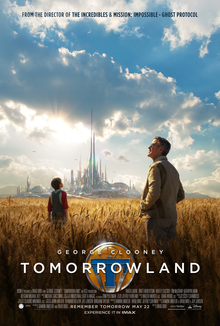
Movie Review: Tomorrowland


Movie: Tomorrowland
Directed by: Brad Bird
Starring: George Clooney, Hugh Laurie, Britt Robertson

Verdict:
Brad Bird’s aggressively optimistic Sci-fi utopia flick tries hard to dazzle with visions of a possible tomorrow, but while Raffey Cassidy’s performance as Athena simmers alongside the special effects, neither were enough to uplift the film’s horrendous pacing and tragically underwhelming plot to anywhere near its promise.

In depth:
For such an effects-heavy film, Tomorrowland was surprisingly muted in most of its previews, being more focused on building an optimistic vibe and buoyant, hopeful atmosphere, rather than on wowing the audience with special effects.  I was initially pleased with this angle, for despite my love of Blade Runner and the rest of the Cyberpunk canon, years of relentlessly bleak and nihilistic dystopian science fiction had ground me low, and while I couldn't stomach a return to the Space Age euphoria of The Jetsons and its relatives, Tomorrowland's exaltation of scientific possibilities as per the previews showed promise in filling a void left in me since Disney’s 2007 animated feature Meet the Robinsons.  Unfortunately, the previews went well beyond merely “doing justice” to the movie - they were downright disingenuous.  Like the film’s hapless protagonists, I felt duped, deceived by a glossy veneer of thoughtful utopian futurism which turned out to mask a spastic and unwieldy film, with seemingly minimal direction and only a heavy-handed “message,” delivered with all the subtlety of a back alley mugger, to greet me at the end.  

Our mournful tale centers around two decidedly different protagonists, both of whom have had their lives altered by contact with the eponymous location. We’re introduced to Frank Walker (Clooney), a bitter and cynical man who is apparently addressing an undisclosed audience about “how we got to here.”  The film throws us back to the 1964 World’s Fair, where an eleven-year-old Walker is gearing up to present his homemade “jetpack” to a very bored Hugh Laurie.  I’ll admit that this is the first - and sadly, only - hope spot in the entire film; the scenery was bright and colorful, and the quasi-philosophical exchange between the boy-genius and Laurie’s character Nix, though hurried and shallow compared to presentations in other movies, did strike at the story’s main nerve: that the invention of any dream, any idea - however fuzzy or incomplete - may spark the seeds of tomorrow’s innovations, if only by willing the heart to consider possibilities.  However, the best part of the beginning was undoubtedly the introduction of Raffey Cassidy as Athena, a young girl with a secret who takes a liking to young Frank and gives him the pin that functions as a pass to Tomorrowland - the hyper-futuristic, creative utopia where all the world’s best minds gather to make the impossible happen.  Yes, it’s true that “English little girl” is usually more than enough characterization to stand out in an American production, but in this case she actually has some meat to her.  Throughout the beginning and going the full nine yards, Cassidy was one snarky, sardonic, butt-kicking, heart string-pulling fountain after another, and the fact that she’s barely past the puberty gateway only makes her ability to meet most of the expectations placed on her all the more impressive.  Her charm and sincerity are all natural, and I wonder what her future has in store for her.

But still, it’s got to be pointed out that Cassidy’s acting chops, even allowing for her age, are only somewhat above adequate, and really only stand out because most of her castmates are sort of a let down.  While I usually enjoy Clooney in most of the films he’s in, this time he came up rather short, playing to stock the most conventional kind of curmudgeon-scorned you could possibly imagine.  However, the exemplary irritation in the acting department  resides squarely with Britt Robertson and her character Casey, the shrill and annoying magnet for most of my frustrations with Tomorrowland.  Playing opposite Clooney as the young, bright, and optimistic science enthusiast, Robertson promised to drive the film’s direction, perhaps bringing Clooney out of the dark and setting a good pace for the rest of the movie.  Unfortunately, she turned out to be a dud, a quintessential example of character shilling who, while smart, never did much more than shout and have her common sense observations called out as “brilliant.”  As with Clooney, her scenes and motivation all amounted to a big “ho-hum,” though I suspect that I probably wouldn’t have noticed as much were I fifteen years younger.  

Worse yet, her appearance coincided with where the plot takes a real nosedive...and pretty much stays at low altitude for over 90 percent of the remainder of the movie.  Story rot doesn’t even begin to cover it; everything spanning from the time she discovered the Tomorrowland pin, until she actually arrives there, was the most bloated, meandering and drawn out stretch of cinema I’ve seen in the past year.  This was supposed to be the point where the plot hits its “meat” - when we learn that not all is sunshine and sprinkles in Tomorrowland, and a contingent of creepy robots are sent to silence Casey from discovering the truth.   Unfortunately, we’re treated to a couple of robot fights, a few extended chases, and a lot of fluff and filler.  It had its moments, I admit - for example, seeing Frank Walker’s near Batman-levels of prepared ingenuity when the bad guys follow Casey to his home was good fun, and one of the best scenes in the movie.  But by and large this hour-long stretch, in an already overly-long 130-minute movie, limped on with little direction, dragging the viewer along while giving no incentive to command our attention other than a sub-adequate jigsaw plot.  Of course, piecing together the story’s “puzzle” might have been fun were there anything at the end of the road worth discovering, but alas, no; they don't even arrive in Tomorrowland until the last 30 or so minutes of the movie, after which everything resolves on the words of the villain’s rather illogical 2-minute diatribe, and not even the surprising maturity by which the movie’s message is presented could offset its heavy-handed delivery, or Tomorrowland's many failings in general.

So was there anything good in this movie?  Well, aside from Cassidy and her antics, the special effects were great, as to be expected.  They were dazzling on their own, but what really stood out was how they dovetailed into the movie’s wider theme of optimism and possibility; the effects, along with the various props accompanying them, had a very “classic” feel, almost as if they were cooked up in the mind of an imaginative ten-year-old - which, when you think about it, may have been the point.  Likewise, they weren’t splattered everywhere, giving the viewer new distractions every 3 seconds, but were used economically, mainly to punctuate how this or that event was in some way “amazing” - and to be honest, it usually worked.  Too bad that even this concession merely damns by faint praise, since the concentrated usage of special effects only highlighted the absolute barrenness of the rest of the film; the draw of flickering lights or a CGI explosion every minute has been the saving throw of many a sub-par movie, as they at least keep the adrenaline amped and the mind numb. But with no such salvation in Tomorrowland, the long desert between the first and last 20 minutes of the movie where nothing of real substance happened felt that much longer.

It’s easy to sneer at my harsh critique - to call me a tin bully, to chide me for cutting down a movie obviously meant to appeal to children.  But that all misses the point; there are many, many, many movies, for children and for adults, that push the same optimistic message of “dream big” with a grace, subtlety, or charm Tomorrowland couldn’t hope to achieve.  While it definitely contained within it the seeds of a solid, mature reconstruction of the future utopianism it tried to embody, we will have to wait another day for a film that can bring those seeds to bloom.

Grade: D